Water Filters - Myths and Truths
January 08, 2020
Water plays a huge role in our health and nutrition and is also an essential commodity. While a huge part of the world don’t have access to clean drinking water, most of us who live in cities have access to safe, potable water - most of which is thanks to water filters. But with standards for quality on a constant rise, many questions are being asked about the need for filters and their effectiveness. Discussions bring up things that may or may not be true - so here are some myths and facts about water purifiers and their impact on water quality.
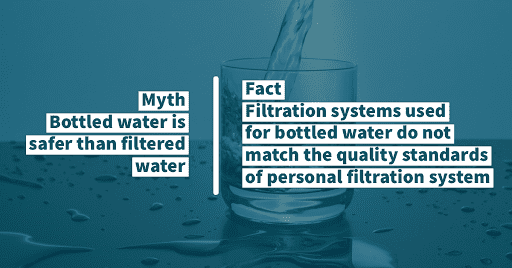
Myth - Bottled Water Is Safer Than Filtered Water
Even though most bottled water manufacturers use filtration systems, they do not operate under the same quality standards that personal filtration system manufacturers do, mainly owing to scale. And then there are countless instances of the water being contaminated by the plastic of the bottle itself.
Fact - Not All Water Filters Are The Same
While all filters share the function of removing some contaminants from water flowing through them, they differ from one another in many ways. Filters are made of different materials that are in turn effective against different forms of contaminants. Knowing what material is needed for which water supply is usually the differentiating factor in choosing between various filters.
Myth - All Filters Remove All Contaminants
All filters remove contaminants, but they all don’t remove every kind. Contaminants can be either:
Physical - Soil, sediment, debris, rust, etc.
Chemical - Naturally occurring chemicals or chemicals produced by industries
Radiological - Chemical contaminants that emit radiation
Biological - Bacteria, viruses, etc.
Not every filter can remove all of these contaminants, while some specifically target one type, and therein lies their difference.
Fact - Residential & Commercial Filters Are Not The Sam e
Commercial filters are usually larger than residential filters with better or more layers of filtration, leading to higher performance and contaminant removing capabilities. Commercial filters are also maintained regularly and thus do not face the same performance issues that the lack of maintenance creates in residential filters.
Myth - Water Filters Only Remove Harmful Contaminants
While filters do remove contaminants that are bad for your body, there are times where they are incapable of distinguishing between something that is good or bad and acts on it based purely on its interaction with the substance. Reverse Osmosis or RO filters, which are easily the most popular filters these days, in some cases might even remove calcium and magnesium particles which are minerals that are considered good for our body. In these cases, the water is still potable, has reduced to no contaminants but might also have a lowered benefit to our body.
All these misconceptions usually lead to one staying away from investing in a filtration system or the wrong one. At ActiveBuildings, not only do they understand these nuances but they also understand that each building or home requires a different approach to filtration based on these very factors. Water Quality is a challenge that can be easily tackled and ActiveBuildings makes it easier for you.
